
Renting a dumpster is one of the easiest ways to manage debris during cleanouts, renovations, and construction projects. However, many homeowners and contractors aren’t sure which dumpster size they actually need.
Choosing the wrong size can lead to unnecessary costs, limited space for debris, or the need to schedule another pickup. Understanding common dumpster sizes and how they match different types of projects can help you avoid delays and keep your cleanup running smoothly.
This guide explains how dumpster sizes work and how to choose the right one for your project.
Why Choosing the Right Dumpster Size Matters
Selecting the proper dumpster size is more important than many people realize. The right choice can save time, improve job site organization, and prevent extra fees.
Avoid Paying for More Than You Need
Renting a larger dumpster than necessary may increase your costs. While larger containers provide more space, many projects only require a mid-sized option.
Choosing the correct size helps keep disposal costs under control.
Prevent Overfilling Issues
Dumpsters cannot be filled above the top rail. If debris sticks out above the edge, the container may not be safely transported.
When this happens, you may need to remove debris or order another container.
Improve Job Site Efficiency
The right dumpster size helps keep your project organized. Contractors, homeowners, and cleanup crews can dispose of debris quickly without worrying about space limitations.
Common Roll Off Dumpster Sizes
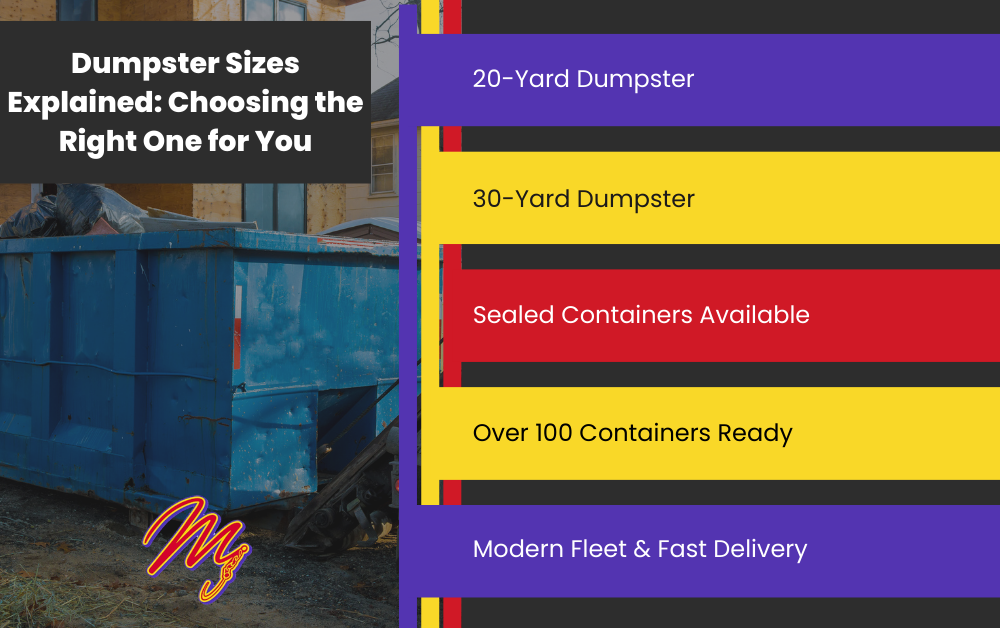
Roll-off dumpsters come in a range of sizes designed for different types of projects. Matthews Garage offers several container options to meet both residential and commercial disposal needs.
20-Yard Dumpster
A 20-yard dumpster is one of the most versatile options available.
Best for:
- Garage or attic cleanouts
- Small remodeling projects
- Residential junk removal
- Light construction debris
- Yard cleanup projects
These containers provide enough space for most home projects while still fitting comfortably in residential driveways.
Because of their manageable size, 20-yard dumpsters are often the most popular choice for homeowners completing renovation or cleanup work.
30-Yard Dumpster
A 30-yard dumpster is designed for larger projects that produce more debris.
Best for:
- Roofing jobs
- Large home cleanouts
- Major remodeling projects
- Commercial construction work
- Large demolition cleanup
This size offers significantly more capacity than smaller containers, making it ideal for contractors and larger residential projects.
If you expect your project to generate a high volume of debris, a 30-yard container can help prevent the need for additional pickups.
30-Yard Sealed Dumpster
Some projects require specialized containment. Matthews Garage offers 30-yard sealed dumpsters designed to safely transport materials that cannot leak or escape during transport.
These containers are commonly used for:
- Wet waste disposal
- Contaminated soil removal
- Environmental cleanup projects
- Materials that require leak protection
Sealed containers provide an extra layer of security when transporting materials that must remain contained.
Flexible Dumpster Service for Any Project
Matthews Garage operates a modern fleet designed to support projects of all sizes.
Their fleet includes six roll-off trucks ready to respond quickly to customer needs, helping ensure timely delivery and pickup. With more than 100 containers in rotation, customers have access to the equipment they need when they need it.
For jobs that require additional protection, Matthews Garage also offers four sealed containers for projects that involve materials requiring leak containment.
For larger operations, Matthews Garage operates a double roll-off trailer capable of transporting multiple containers at once. This allows for faster container swaps and improved efficiency, helping reduce downtime on busy job sites.
How to Choose the Right Dumpster Size
Selecting the right dumpster size depends on several factors, including the type of project, the amount of debris, and the materials being disposed of.
Consider Your Project Type
The scope of your project is one of the biggest indicators of which dumpster size you need.
Examples include:
- Garage cleanout → 20-yard dumpster
- Small renovation → 20-yard dumpster
- Roofing project → 30-yard dumpster
- Commercial construction → 30-yard dumpster
Understanding the scale of your work helps narrow down the right container size.
Estimate the Amount of Debris
Try to estimate how much debris your project will produce. Factors that influence this include:
- Square footage of the project
- Types of materials being removed
- Whether demolition is involved
If you expect a large amount of debris, choosing a larger dumpster may help prevent overflow issues.
Think About the Type of Materials
Different materials take up space differently.
For example:
- Furniture and household junk create bulky loads
- Roofing shingles add significant weight
- Construction materials may include heavy debris
If your project includes specialized materials like wet waste or contaminated soil, a sealed dumpster may be required.
Ask Your Dumpster Provider for Guidance
If you’re unsure which size to choose, a professional dumpster provider can help you make the right decision.
Experienced teams can recommend a container based on:
- The type of project
- The materials being disposed of
- Available space at your location
This ensures you receive a dumpster that fits both your cleanup needs and your job site.
Tips for Loading a Dumpster Efficiently
Loading a dumpster properly can help maximize space and prevent issues during pickup.
Break Down Large Items
Breaking down bulky items such as furniture, cabinets, and construction materials allows you to use space more efficiently.
Distribute Weight Evenly
Placing heavier materials across the bottom of the container helps balance the load and improves transport safety.
Avoid Overfilling
Keep debris level with the top edge of the dumpster. Overfilled containers may delay pickup or require materials to be removed.
When to Choose a Larger Dumpster
In some cases, selecting a larger container is the safer choice.
This is especially true for:
- Whole-home cleanouts
- Major renovation projects
- Demolition jobs
- Projects with mixed debris
Choosing a slightly larger dumpster can prevent the inconvenience of needing a second container.
Choose the Right Dumpster for a Smoother Project
Understanding dumpster sizes helps homeowners and contractors manage debris more efficiently. The right container keeps your project organized, prevents delays, and ensures cleanup stays on schedule.
Matthews Garage provides flexible dumpster services with a large fleet of containers ready to support projects of any size. Whether you’re handling a residential cleanout, a roofing project, or a commercial construction job, their team can help you choose the right dumpster for the job.
If you’re planning a project and need dependable dumpster service, contact Matthews Garage to schedule delivery and get expert guidance on the best container for your needs.