Renting a roll off dumpster is one of the easiest ways to keep a job site clean and organized. But many customers quickly realize they are unsure about what they are actually allowed to throw away.
Following proper dumpster rental guidelines is important. It prevents unexpected fees, avoids pickup delays, and ensures you stay compliant with local disposal regulations. Whether you are managing a construction site, renovating your home, or cleaning out a property, knowing what can and cannot go into a dumpster will save you time and money.
Here is a clear breakdown to help you load your dumpster the right way.
What Is a Roll-Off Dumpster?
A roll-off dumpster is a large, open-top container delivered to your home, job site, or business location. It is commonly used for:
- Construction and demolition projects
- Roofing jobs
- Property cleanouts
- Remodeling and renovation
- Landscaping projects
The dumpster is delivered, placed on-site, filled at your pace, and then hauled away when you are finished.
Because the contents are transported to landfills or disposal facilities, there are specific dumpster rental guidelines that must be followed. These rules exist for environmental protection, landfill safety, and transportation regulations.
What You CAN Put in a Roll Off Dumpster
Most common debris from construction, remodeling, and cleanouts is allowed. Here are typical materials that are accepted.
Construction and Demolition Debris
- Drywall
- Lumber and wood scraps
- Flooring materials
- Roofing shingles
- Siding
- Non-hazardous insulation
- Cabinets and countertops
These materials are standard for renovation and demolition projects.
Household Junk
- Furniture
- Couches and chairs
- Mattresses (in some cases, check ahead)
- Clothing
- Toys
- Non-electronic household items
If you are cleaning out a garage, attic, or rental property, most general junk is acceptable.
Yard Waste (If Approved)
Depending on local regulations, you may be able to dispose of:
- Branches
- Brush
- Leaves
- Landscaping debris
Some areas require yard waste to be separated, so it is always best to confirm before loading.
Non-Hazardous Materials
- Cardboard
- Packaging materials
- Non-contaminated metal scraps
- Plastic materials
If you are unsure about a material, it is always safest to ask before tossing it in.
What You CANNOT Put in a Roll Off Dumpster
Certain items are restricted due to environmental laws, landfill regulations, and safety risks. Violating dumpster rental guidelines can result in additional fees or rejected loads.
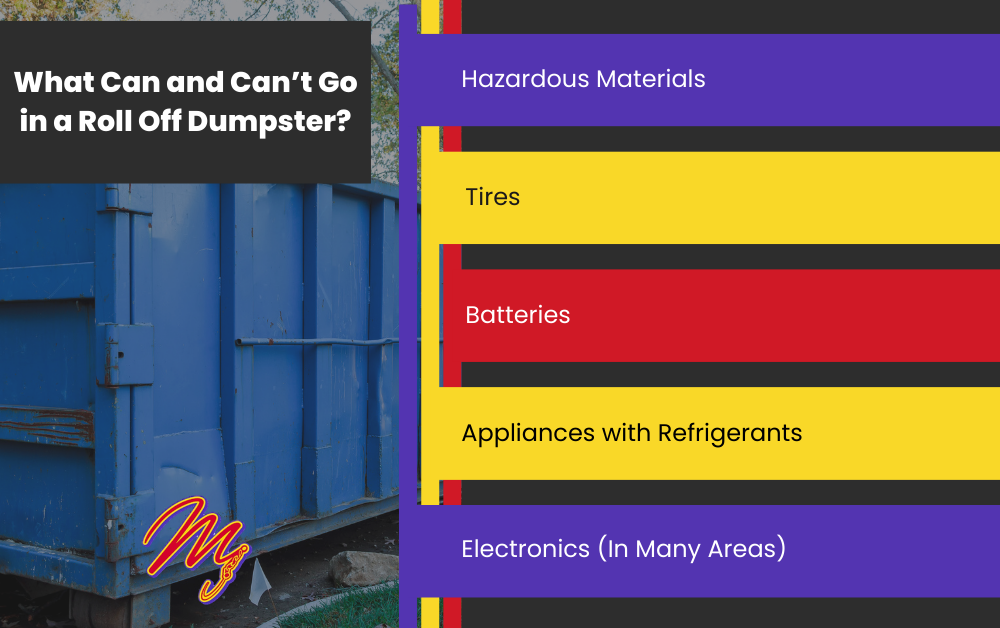
Hazardous Materials
The following items are not allowed:
- Paints and solvents
- Fuel and oil
- Chemicals and cleaning agents
- Pesticides
- Asbestos-containing materials
These substances require special disposal procedures.
Tires
Most landfills restrict tires because they are difficult to process and can trap air, creating hazards.
Batteries
- Car batteries
- Lithium-ion batteries
- Rechargeable batteries
Batteries contain chemicals that require separate recycling.
Appliances with Refrigerants
- Refrigerators
- Freezers
- Air conditioning units
These appliances contain refrigerants that must be properly removed before disposal.
Electronics (In Many Areas)
- Televisions
- Computers
- Monitors
- Printers
Many regions require electronic recycling rather than landfill disposal.
Medical Waste
- Needles and sharps
- Biohazard materials
- Prescription medications
These items must be disposed of through specialized services.
If you are ever unsure, always confirm with your dumpster provider before loading restricted materials.
Weight Limits and Overfilling Rules
In addition to material restrictions, dumpster rental guidelines also include weight and loading limits.
Understanding Weight Limits
Each dumpster has a tonnage cap. Heavy materials such as concrete, roofing shingles, and dirt can quickly exceed weight limits. Going over the allowed weight may result in additional charges.
If your project includes dense debris, discuss this in advance so the correct dumpster size can be recommended.
Do Not Overfill
Debris should never extend above the top edge of the dumpster. Overfilled dumpsters are unsafe to transport and may delay pickup.
For safe removal:
- Keep debris level with the top rail
- Distribute weight evenly
- Avoid stacking materials too high
Proper loading ensures safe hauling and prevents delays.
Special Situations: Always Ask First
Some materials fall into gray areas and require confirmation.
Concrete and Heavy Materials
Large amounts of concrete, brick, or asphalt may require a specific type of dumpster.
Dirt and Gravel
Pure dirt loads are often handled differently due to weight concerns.
Roofing Projects
Roof tear-offs can be heavy. Discuss the square footage of your project before selecting a dumpster size.
Mixed Debris Loads
Combining multiple types of debris may affect disposal regulations. Clear communication helps avoid issues.
When in doubt, a quick phone call can prevent costly mistakes.
Tips for Following Dumpster Rental Guidelines
Staying compliant is simple if you plan ahead.
- Separate hazardous materials before loading
- Ask for a list of prohibited items
- Communicate the type of project you are doing
- Estimate how much heavy debris you expect
- Load evenly and avoid overfilling
Proper planning keeps your project running smoothly.
Why Following Dumpster Rental Guidelines Saves You Money
Ignoring guidelines can lead to:
- Contamination fees
- Refused loads
- Pickup delays
- Additional disposal charges
Following the rules helps your dumpster provider remove your debris quickly and safely. It also keeps your job site organized and compliant with local disposal regulations.
Follow Dumpster Rental Guidelines for a Smooth Cleanup
Most common construction debris, household junk, and non-hazardous materials can go in a roll off dumpster. The key is avoiding restricted items and respecting weight limits.
Before loading, take a few minutes to review dumpster rental guidelines. If you are unsure about a material, ask first. A little preparation prevents delays and extra costs.
If you are planning a project and need a roll off dumpster, contact Matthews Garage to confirm accepted materials and schedule your delivery. Their team can help you choose the right size and ensure your cleanup goes smoothly from start to finish.