
A shifted load can turn a routine haul into a serious safety hazard in seconds. What starts as a sudden lean in the trailer or a strange pull on the steering wheel can quickly escalate into rollover risk, cargo damage, highway closures, and major financial loss.
For fleet managers and commercial drivers, a load shift is more than an inconvenience. It is a liability event. The way it is handled determines whether the situation stays controlled or spirals into a costly incident.
This guide explains what causes load shifts, what to do immediately, and how professional load shift recovery and heavy duty recovery teams protect your cargo, equipment, and reputation.
What Is a Load Shift?
A load shift occurs when cargo moves from its secured position during transport. Even small movement inside a trailer can alter weight distribution, placing uneven stress on axles and suspension systems.
Common Causes of Load Shifts
Load shifts can happen for several reasons:
- Sudden braking
- Sharp turns at highway speeds
- Improper load securement
- Uneven weight distribution
- Road hazards or collisions
- Wet or icy conditions
- Shifting pallets or unsecured heavy machinery
Even experienced drivers can encounter unexpected road conditions that cause cargo movement.
Warning Signs of a Load Shift
Drivers may notice:
- Trailer leaning to one side
- Steering instability
- Difficulty maintaining lane position
- Suspension strain
- Unusual tire wear
- Visible cargo movement when inspecting the trailer
Ignoring these warning signs can lead to rollovers or jackknife accidents.
Why a Load Shift Is More Than an Inconvenience
When freight moves, the risk extends beyond delayed delivery.
Safety Risks
An unbalanced trailer increases:
- Rollover potential
- Loss of steering control
- Jackknifing risk
- Road hazards for surrounding vehicles
A severe load shift can compromise the structural integrity of the trailer itself.
Financial Risks
The financial impact can be significant:
- Damaged freight
- Missed delivery deadlines
- Contract penalties
- Insurance claims
- Equipment damage
- Increased downtime
For fleet managers, a poorly handled recovery can cost far more than the original issue.
Compliance Risks
Load shifts can also trigger:
- DOT violations
- Out-of-service orders
- Inspection failures
This is why professional heavy duty recovery is essential.
What To Do Immediately After a Load Shift
The first few minutes matter most.
Reduce Speed Gradually
Avoid hard braking. Sudden stops can worsen cargo movement. Gradually reduce speed and carefully move toward a safe shoulder if possible.
Secure the Scene
Once stopped:
- Activate hazard lights
- Set warning triangles
- Remain visible to approaching traffic
If the vehicle feels unstable, stay in the cab until the situation can be assessed safely.
Do Not Attempt DIY Rebalancing
One of the most dangerous mistakes is opening trailer doors without professional support. If cargo has shifted against the doors, opening them can result in falling freight and serious injury.
Drivers should not attempt to manually rebalance heavy cargo on the roadside. This requires specialized equipment and trained operators.
Call a Professional Heavy Duty Recovery Service
Load shifts require more than basic towing. A professional load shift recovery team has the equipment and expertise to stabilize the trailer and protect the cargo.
Providing clear information to dispatch helps speed up response time:
- Exact location
- Type of cargo
- Estimated weight
- Whether the trailer is leaning
- Any visible damage
Quick, accurate communication reduces downtime and risk.
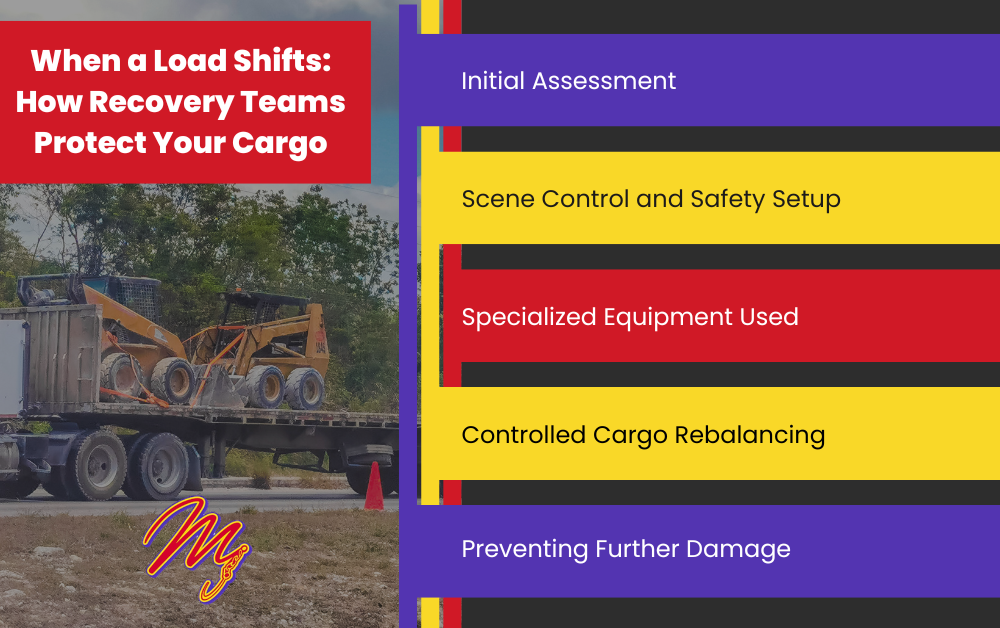
How Professional Load Shift Recovery Works
Many fleet managers are unsure what happens once recovery crews arrive. Understanding the process helps build confidence.
Initial Assessment
Recovery operators begin by:
- Stabilizing the truck and trailer
- Evaluating trailer integrity
- Identifying cargo displacement severity
- Assessing rollover risk
The goal is to prevent further movement before any corrective action begins.
Scene Control and Safety Setup
Professional heavy duty recovery teams establish a secure perimeter. This may include:
- Positioning recovery vehicles strategically
- Blocking traffic lanes if necessary
- Using safety lighting and warning systems
Scene control protects both operators and the public.
Specialized Equipment Used in Heavy Duty Recovery
Load shift recovery often requires advanced equipment such as:
- Heavy-duty rotator wreckers
- Recovery cranes
- Stabilization rigs
- Air cushion recovery systems
Standard tow trucks are not equipped for this type of controlled lifting and stabilization.
Controlled Cargo Rebalancing
The recovery team may:
- Open trailer doors carefully under controlled conditions
- Remove displaced cargo using lifting equipment
- Reposition freight inside the trailer
- Offload and reload cargo if necessary
The objective is to minimize cargo handling while restoring proper balance.
Preventing Further Damage
Experienced operators understand weight distribution, rigging, and load stabilization techniques. Their expertise reduces:
- Additional freight damage
- Trailer structural stress
- Insurance complications
- Extended downtime
This is where professional heavy duty recovery makes a measurable difference.
Why Experience and Equipment Matter
Not every towing company handles load shifts. There is a significant difference between standard towing and specialized load shift recovery.
Trained Operators Reduce Risk
Experienced recovery professionals understand:
- Weight transfer dynamics
- Trailer stabilization
- Proper rigging techniques
- Safe lifting procedures
Inexperienced handling can worsen cargo damage and increase liability exposure.
Faster Clearance Reduces Liability
Highway incidents draw attention from law enforcement and DOT inspectors. Faster stabilization and clearance reduce:
- Traffic congestion
- Secondary accident risk
- Regulatory scrutiny
Time matters, especially in commercial transport.
How Fleet Managers Can Reduce Load Shift Risk
While recovery services are essential, prevention is equally important.
Fleet managers should implement:
- Proper load securement training
- Weight distribution verification before departure
- Regular trailer inspections
- Cargo tie-down inspections
- Clear emergency response protocols
Most importantly, fleets should establish a pre-approved heavy duty recovery partner before an emergency happens.
Prepared fleets recover faster and suffer fewer losses.
The Cost of Choosing the Wrong Recovery Team
Selecting an unqualified service can lead to:
- Increased freight damage
- Trailer structural damage
- Prolonged road closures
- Insurance disputes
- Reputation damage with clients
Professional load shift recovery protects more than cargo. It protects business relationships.
Protect Your Cargo Before Downtime Costs You More
A load shift is a high-risk situation that demands professional handling. Attempting to manage it without proper equipment can escalate the problem quickly.
With the right heavy duty recovery team, cargo can be stabilized, damage minimized, and operations restored efficiently.
For fleet managers, the best strategy is preparation. Have a trusted load shift recovery provider saved before you need one. When freight moves unexpectedly, quick action and professional expertise make all the difference.
Need Immediate Load Shift Recovery?
If your trailer is leaning, unstable, or your cargo has shifted, don’t take risks. Call Matthews Garage for professional heavy duty recovery and load shift recovery services.
Our team responds quickly with the right equipment to stabilize your truck, protect your freight, and get you back on schedule safely. Save our number now so you’re ready before the next emergency.