
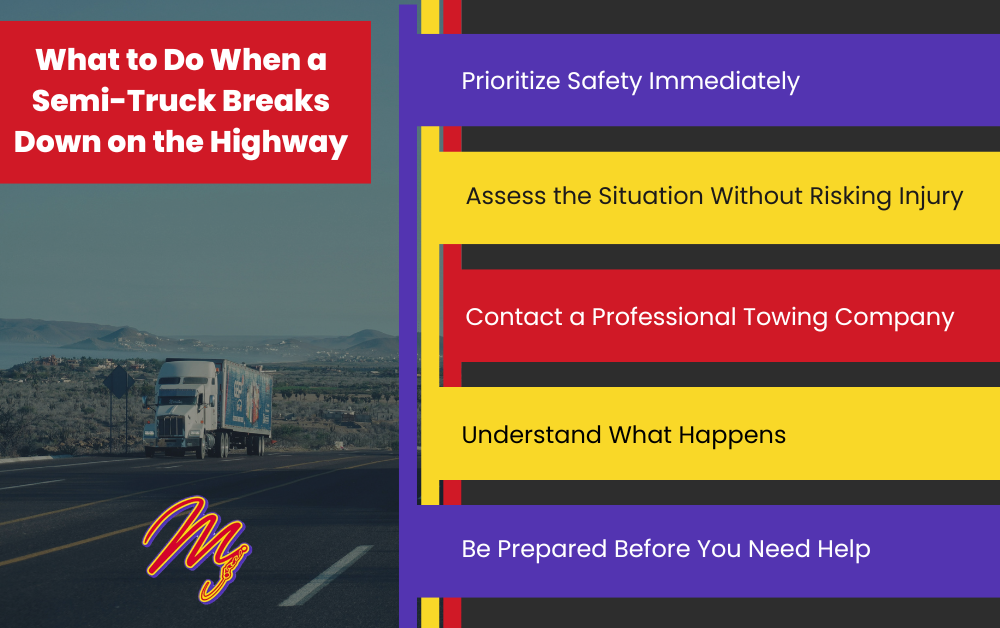
A semi-truck breakdown is more than just an inconvenience. It can shut down lanes, delay loads, create safety hazards, and cost thousands of dollars in lost time. For drivers and fleet managers, every minute matters.
Whether you’re dealing with engine failure, a blown tire, or a loaded trailer that won’t move, knowing exactly what to do can protect lives, cargo, and your bottom line. Here’s a step-by-step guide to handling a breakdown safely and getting the right heavy duty towing support fast.
Step 1: Prioritize Safety Immediately
The first priority is always safety — yours and everyone else on the road.
Move the Truck to a Safe Location (If Possible)
If the truck is still operational enough to move:
- Pull as far onto the shoulder as possible
- Avoid stopping on blind curves or narrow bridges
- Set the parking brake firmly
- Turn wheels away from traffic if on an incline
If you cannot move the vehicle, stay inside the cab with your seatbelt fastened until it’s safe to exit.
Activate Hazard Lights Immediately
Turn on hazard lights as soon as trouble begins. Early warning gives approaching drivers more time to slow down or change lanes.
Deploy Warning Triangles
Federal regulations require warning devices for commercial vehicles. Place reflective triangles:
- One within 10 feet of the truck
- One approximately 100 feet behind
- One approximately 200 feet behind
Visibility reduces secondary accidents, especially at night or during poor weather.
Step 2: Assess the Situation Without Risking Injury
Once the truck is secure, carefully evaluate what happened.
Identify Obvious Issues
Some common causes of breakdowns include:
- Tire blowouts
- Overheating engines
- Transmission failure
- Electrical issues
- Trailer detachment
- Brake system failure
Avoid crawling under the truck near traffic lanes. Do not attempt complex roadside repairs unless you are in a completely safe environment.
Stay Clear of Traffic
Roadside accidents often happen when drivers attempt quick fixes in unsafe conditions. Your safety is worth more than shaving a few minutes off a delivery.
If the vehicle is heavily damaged, leaning, stuck off-road, or partially overturned, you will likely need professional heavy duty towing or recovery equipment.
Step 3: Contact a Professional Heavy Duty Towing Company
Not all towing companies are equipped to handle a semi-truck. Calling a standard tow truck service can waste valuable time and create additional risk.
Why Heavy Duty Towing Is Essential
Semi trucks require specialized equipment designed for:
- High weight capacities
- Long wheelbases
- Air brake systems
- Loaded trailers
- Accident recovery
Professional semi truck towing companies use heavy-duty wreckers capable of safely lifting and transporting commercial vehicles without causing further damage.
What to Tell Dispatch
To speed up response time, provide:
- Exact highway name and mile marker
- Direction of travel
- Description of the issue
- Whether lanes are blocked
- Type of cargo being hauled
- If there is hazardous material involved
Clear information allows the correct wrecker service and equipment to be dispatched the first time.
Why Response Time Matters
Delays can lead to:
- Missed delivery windows
- DOT violations
- Increased roadside danger
- Traffic congestion
- Higher recovery costs
The faster a qualified heavy duty towing team arrives, the faster the situation can be stabilized.
Step 4: Understand What Happens During Semi Truck Towing
Many drivers and fleet managers don’t know what happens after they make the call.
Proper Equipment for the Job
Depending on the situation, a professional semi truck towing company may use:
- Heavy-duty wreckers
- Rotator trucks
- Recovery cranes
- Winching systems
- Air cushion recovery systems
If the truck is overturned or stuck in a ditch, specialized recovery equipment is required. This is not a standard tow job.
Securing the Load
Proper load stabilization is critical. Experienced operators:
- Secure cargo before lifting
- Protect trailer integrity
- Prevent load shifting during transport
- Reduce additional damage
This is especially important for refrigerated loads, construction equipment, or high-value freight.
Recovery vs. Simple Tow
There is a difference between towing and recovery.
- A simple tow involves lifting and transporting a disabled truck.
- Recovery may involve winch-outs, uprighting a rollover, or extracting a vehicle from mud or embankments.
Heavy recovery situations require trained operators and proper equipment to prevent further damage or injury.
Common Mistakes to Avoid During a Breakdown
Even experienced drivers make mistakes under pressure.
Avoid these common errors:
- Calling the cheapest service instead of a qualified heavy duty towing provider
- Attempting unsafe roadside repairs
- Providing incomplete information to dispatch
- Leaving the vehicle unattended
- Ignoring proper safety device placement
Choosing the wrong wrecker service can lead to longer delays and even more damage.
What Fleet Managers Should Have in Place Before a Breakdown
Breakdowns are inevitable. Preparation reduces chaos.
Fleet managers should establish:
- A pre-approved heavy duty towing partner
- An emergency contact protocol
- A driver checklist for roadside incidents
- Documentation and reporting procedures
Having a plan reduces downtime and eliminates confusion when problems arise.
Be Prepared Before You Need Help
Semi-truck breakdowns are stressful, unpredictable, and potentially dangerous. But knowing the right steps to take can protect drivers, cargo, and company reputation.
Safety comes first. Clear communication comes second. Professional heavy duty towing comes next.
If you operate commercial vehicles, make sure you have a trusted semi truck towing and wrecker service saved in your contacts before you need it. Fast response times and the right equipment can mean the difference between hours of downtime and getting back on the road quickly.
When a breakdown happens, preparation and professionalism make all the difference.
Need Heavy Duty Towing Fast?
Matthews Garage provides professional heavy duty towing, semi truck towing, and full-service wrecker service with the equipment and operators needed to handle the job safely and efficiently.
Save our number now so you’re prepared before the next emergency. When you call, you’ll get fast response times, the right equipment, and a team that knows how to get you back on the road.